Virtual data room pricing
The complete, plain-English guide to virtual data room pricing: the going rates, the four ways providers charge, what a room costs by deal size, the fees that hide in the fine print, and interactive tools to size your own budget.
On this page
How virtual data room pricing works in 2026
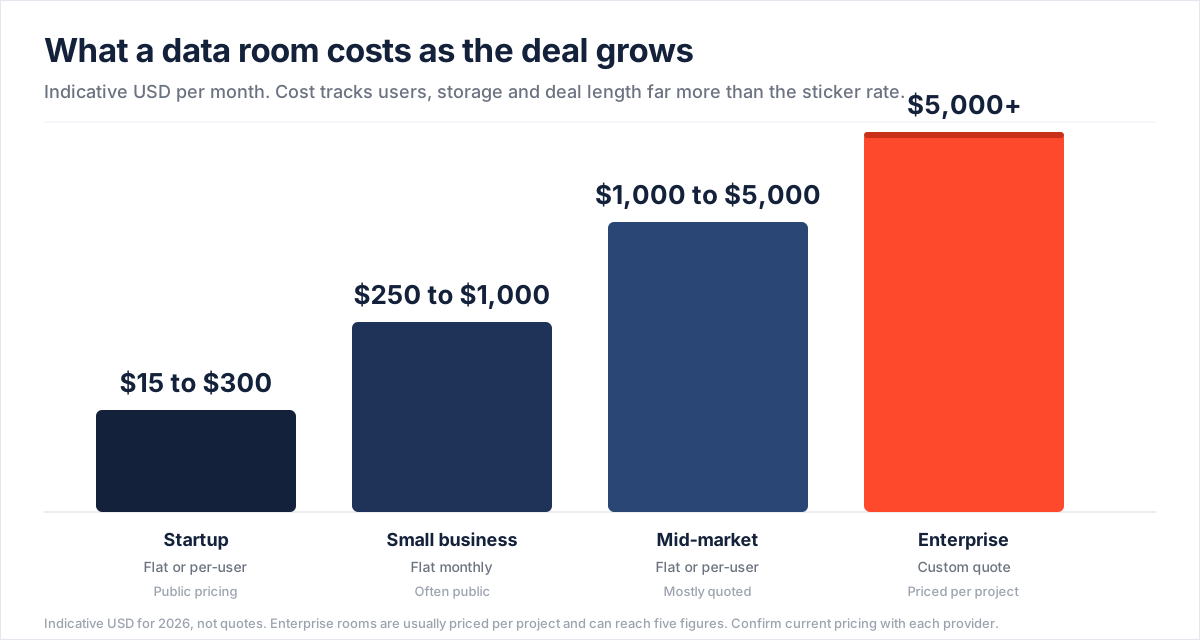
Pricing for a virtual data room falls into three broad tiers. Lightweight, flat-rate rooms aimed at startups and small business list publicly and start around $15 to $299 per month. Mid-market platforms that run active M&A and fundraising typically land between $1,000 and $5,000 per month once you factor in seats and storage. Enterprise and advisory-grade rooms, the kind used for large-cap deals and regulated transactions, are quoted custom and are often priced per project rather than per month.
Two things make VDR pricing harder to read than ordinary software. First, most of the enterprise field does not publish a rate at all: in our roster, 17 of 25 providers quote custom. Second, the sticker price rarely tells the whole story, because storage overage, extra seats and one-off setup fees are billed separately. Treat any published number as a starting point and get a written quote that lists the included limits.
The pricing models explained
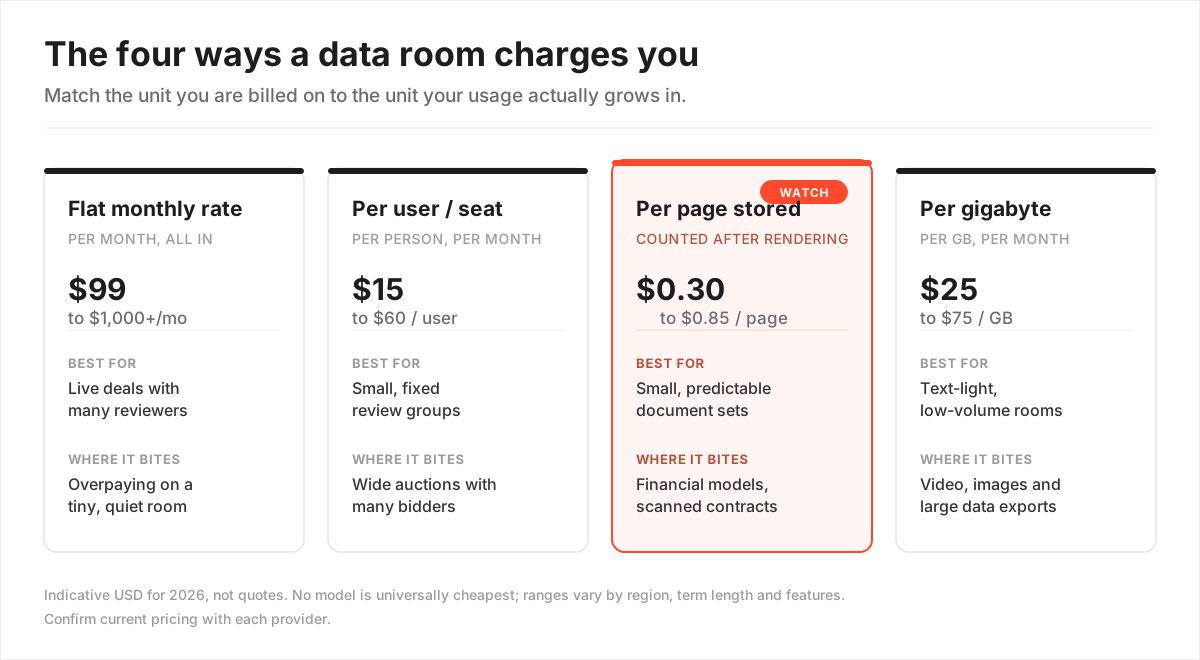
Almost every VDR bill is built from a mix of four charging models, plus setup fees and overage as extras. Knowing which one a provider uses is the fastest way to predict what you will actually pay, because the same headline price behaves very differently on a per-user plan than on a flat-rate one. Match the unit you are billed on to the unit your usage actually grows in.
The four core VDR pricing models, compared
| Pricing model | How it bills | Best for | Where it bites |
|---|---|---|---|
| Flat monthly | One fixed fee per room, usually with a storage cap and a set number of seats included. | A predictable timeline and a wide reviewer or bidder list. | Overage once you pass the included storage or seats; overpaying on a tiny, quiet room. |
| Per user | A monthly charge for each named user or admin seat you add, sometimes over a small base fee. | A small, stable core team that needs a modest room. | Cost multiplies once you open the room to many bidders or advisers. |
| Per page | A cents-per-page charge for every document page hosted, counted after rendering. | A small, predictable, short-lived document set. | Financial models and scanned contracts explode the page count and the bill. |
| Per GB | Priced by the gigabytes of data you store each month. | A text-light room with few, small files. | Video, images and large exports make per-GB the priciest model fast. |
Which pricing model is cheapest?
There is no single winner; the cheapest model depends on your deal shape. A flat monthly plan wins when your timeline is fixed and your reviewer list is wide, because the bill does not move as you add people. Per-user pricing is efficient for a tight core team but climbs fast once you open the room to many bidders or advisers. Per-page pricing only makes sense for a small, short-lived room; on a document-heavy diligence project it can become the most expensive option. Per GB suits a text-light room but punishes video and large exports.
What a virtual data room costs by deal size
The single biggest driver of your bill is the size and shape of the deal, not the vendor's floor price. The table below maps typical monthly USD ranges to four common tiers, from a lean startup room to an advisory-grade enterprise deal, along with the model each tier usually uses and what the budget tends to cover.
Indicative monthly cost by deal and company size
| Deal or company size | Typical monthly (USD) | Common model | What the budget usually covers |
|---|---|---|---|
| Startup / early stage | $15 to $300 / mo | Flat or per-user | A lean room for a seed or Series A raise: a handful of seats, light storage, standard permissions. |
| Small business / SMB | $250 to $1,000 / mo | Flat monthly | A self-serve room for an asset sale or audit: more seats and storage, basic Q&A and audit logs. |
| Mid-market | $1,000 to $5,000 / mo | Flat or per-user | An active M&A or fundraising room: many reviewers, granular permissions, analytics and support. |
| Enterprise / large-cap | $5,000+ / mo, custom | Custom quote | Advisory-grade rooms for large or regulated deals, usually priced per project and often five figures. |
Estimate your data room budget
Put your own numbers in. Set the pricing model, estimated pages, storage, seats and project length, and the calculator returns an indicative monthly and project-total USD range. It is a starting point built from typical market rate bands, not a quote, so confirm the exact price with the provider.
What drives the cost of a data room?
On metered plans, a handful of variables move your bill far more than the headline rate. Before you compare quotes, size each of these to your actual deal so you are comparing like for like rather than one vendor's floor price against another's realistic total.
- User seats: named users or admins on per-user plans; wide bidder lists multiply cost.
- Storage volume: the gigabytes of documents you host, and the overage rate once you pass the cap.
- Page or document count: the trigger on any per-page or metered plan.
- Deal length: how many months the room stays open; a room left running after close keeps billing.
- Advanced features: AI Q&A, redaction, granular permissions and analytics often sit above the base tier.
- Support level: a managed service, a named contact or 24/7 support is frequently a paid add-on.
- Concurrent rooms: running several deals at once may need a multi-room or portfolio plan.
- Compliance tier: a specific hosting region or higher compliance plan can move you up a tier, so keep it on the checklist.
Hidden costs and add-on fees
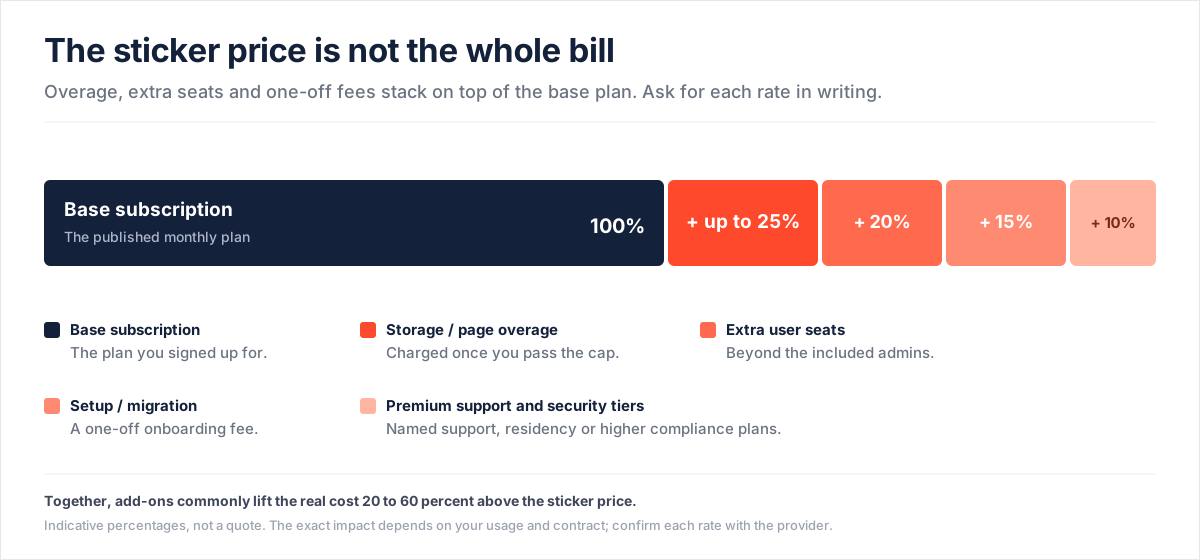
The published plan is rarely the final number. Overage, extra seats and one-off fees stack on top, and together they commonly lift the real cost 20% to 60% above the sticker price. Ask for each rate in writing before you sign so there are no surprises mid-deal.
The add-on fees that inflate a data room bill
| Extra cost | When it hits | Typical impact |
|---|---|---|
| Setup / onboarding | A one-off fee at launch for configuration or a bulk document migration. | A single charge, often negotiable or waivable on an annual deal. |
| Storage or page overage | When you pass the included GB or page cap mid-deal. | Can add up to about 25% if you underestimate volume; ask for the per-unit rate. |
| Extra user seats | When the reviewer or bidder list grows beyond the included admins. | Roughly +20% on per-user plans as the list widens. |
| Premium support | A named contact, managed service or 24/7 support tier. | Commonly a paid add-on worth around 10% of the plan. |
| Security and data residency | Higher compliance tiers or a specific hosting region, where offered. | Late-stage add-on; can move you to a higher plan. Keep it on the checklist, not the headline. |
Which pricing model fits you?
Answer four questions about your deal and we will suggest a pricing model and a rough monthly budget.
Entry prices for every VDR we track
The table below lists the published starting price for each provider in our ranking, in USD, alongside the billing model it uses and whether a free trial is available. Where a provider quotes custom, the room is priced on your users, storage and deal length, so ask for a written quote.
Starting price by provider, ranked by our score
| Provider | Starting price (USD) | Billing model | Trial |
|---|---|---|---|
 Ellty Ellty | $149/mo | Flat monthly | Free trial |
 iDeals iDeals | Custom | Custom quote | Free trial |
 Datasite Datasite | Custom | Custom quote | No trial |
 Intralinks Intralinks | Custom | Custom quote | No trial |
 Ansarada Ansarada | Custom | Custom quote | Free trial |
 Firmex Firmex | Custom | Custom quote | Free trial |
 Drooms Drooms | Custom | Custom quote | No trial |
 Diligent Diligent | Custom | Custom quote | No trial |
 SmartRoom SmartRoom | Custom | Custom quote | No trial |
 DealRoom DealRoom | Custom | Custom quote | Free trial |
 Box Box | $15/user/mo | Per user, monthly | Free trial |
 Citrix ShareFile Citrix ShareFile | $55/mo | Flat monthly | Free trial |
 ShareVault ShareVault | Custom | Custom quote | Free trial |
 CapLinked CapLinked | $299/mo | Flat monthly | Free trial |
 SecureDocs SecureDocs | $250/mo | Flat monthly | Free trial |
 Onehub Onehub | $15/mo | Flat monthly | Free trial |
 HighQ HighQ | Custom | Custom quote | No trial |
 Venue by DFIN Venue by DFIN | Custom | Custom quote | No trial |
 EthosData EthosData | Custom | Custom quote | Free trial |
 Brainloop Brainloop | Custom | Custom quote | No trial |
 Digify Digify | $120/mo | Flat monthly | Free trial |
 DocSend DocSend | $45/user/mo | Per user, monthly | Free trial |
 BlackBerry Workspaces BlackBerry Workspaces | Custom | Custom quote | Free trial |
 ForData ForData | Custom | Custom quote | Free trial |
 Sterling Sterling | Custom | Custom quote | No trial |
Monthly vs annual billing
Most providers bill monthly by default and offer a discount for paying annually, often somewhere between 10% and 20% off the monthly rate. Annual is the better deal when the room will stay open for most of a year, such as an ongoing fundraise or a portfolio of rolling diligence. For a short, defined transaction, month-to-month is usually smarter: it avoids paying for capacity after the deal closes, and closing the room promptly is one of the simplest ways to keep the total down. Match the term to the deal window rather than defaulting to the headline annual discount.
Free trials and truly free rooms
There is no such thing as a full, secure data room for nothing, but a free trial is common and worth using. It lets you test setup, permissions and the reviewer experience on your own documents before you pay. In our dataset, several providers offer one, including Ellty, whose free trial runs 14 days. General cloud storage such as a shared drive can be free, but it lacks the granular permissions, watermarking and audit trail a real deal needs, so it is a false economy once confidential information is involved. Use a trial to shortlist two or three rooms, then commit to the one that fits the deal.
How to lower the cost and negotiate
Because the room is a small fraction of the deal it protects, the goal is not the cheapest sticker price but the lowest total for the capability you need. A few tactics reliably bring the number down:
- Right-size the plan: match seats and storage to the actual deal, not a worst case, and add capacity only if you hit the cap.
- Pick the model that fits: flat monthly for a wide reviewer list, per-user for a tight team, so you are not paying for the wrong unit.
- Close the room on time: a room left running after the deal closes keeps billing; export and archive promptly.
- Negotiate the setup fee: onboarding and migration charges are often waivable, especially on an annual commitment.
- Ask for the overage rates up front: get the per-GB, per-page and per-seat rates in writing so a mid-deal spike does not surprise you.
- Use a free trial to create competition: shortlisting two or three rooms on the same criteria gives you leverage on price.
Is a data room worth it? Cost vs deal value
Set against the size of the transaction it protects, a data room is almost always a rounding error. The tool below turns your deal value and monthly price into a percentage and basis points, which is how advisers usually frame the cost. For most mid-market deals the answer lands well under 0.1% of deal value.
Virtual data room pricing: FAQ
How much does a virtual data room cost per month?
For small and mid-market plans, expect roughly $99 to $1,000 per month in USD. Flat-rate rooms in our dataset start around $15 to $299 per month, while enterprise and deal-based rooms are quoted custom and can reach several thousand dollars per project. All figures are indicative; confirm the current number with the provider.
What are the main virtual data room pricing models?
Four core models cover almost every bill: flat monthly (one fixed fee per room), per user (a charge per named seat), per page (cents per document page hosted) and per GB (priced by data volume). Setup fees and overage sit on top as extras. Flat monthly is the most common for active deals because it is the easiest to budget.
Do virtual data rooms still charge per page?
Some legacy and investment-banking-grade platforms still offer per-page pricing, typically a few cents to under a dollar per page. Most modern providers have moved to flat monthly or per-user plans, which are far easier to budget for document-heavy deals.
Is monthly or annual billing cheaper for a data room?
Annual billing usually carries a discount, often 10% to 20% off the monthly rate, and is worth it when the room will stay open for most of a year. For a short, defined deal, month-to-month avoids paying for capacity after the deal closes. Match the term to the deal window rather than defaulting to annual.
Is there a free virtual data room?
Most reputable providers do not give away a full data room at no cost, but many offer a free trial so you can test the platform before you commit. In our dataset, providers such as Ellty, iDeals and Firmex offer a free trial; Ellty runs a 14-day free trial. General cloud storage can be free but lacks the permissions and audit trail a real deal needs.
Why do so many VDR providers hide their pricing?
Enterprise and deal-focused vendors usually quote custom because the price depends on users, storage, deal length and required features. Around two-thirds of the providers we track quote custom rather than publish a rate. Ask for a written quote that lists the included limits and the overage rates.
What hidden fees should I watch for?
The common extras are overage on storage, pages or users; a one-off setup or migration fee; charges for additional admin seats; and premium support tiers. Together they can lift the real cost 20% to 60% above the sticker price. Ask for the per-unit overage rate and any onboarding fee in writing before you sign.
How can I lower the cost of a data room?
Right-size storage and seats to the deal, choose a flat monthly plan when your timeline is predictable, close the room promptly once the deal ends, negotiate the setup fee, and use a free trial to shortlist. Comparing providers side by side on the same criteria helps you avoid paying for capacity you will not use.
