
The best virtual data rooms in 2026
On this page
There is no single best virtual data room. There is only the room that fits the deal in front of you.
Think about who is shopping. A biotech licensing a molecule. A founder raising a seed round. A bank selling a $2bn division. Same category of tool, three completely different needs, and not one of them should buy the same room.
Fit beats brand. Every time.
So this guide does two things. It ranks the providers we rate most highly in 2026, then it splits the field by the actual job you are hiring a room to do.
The 2026 shortlist
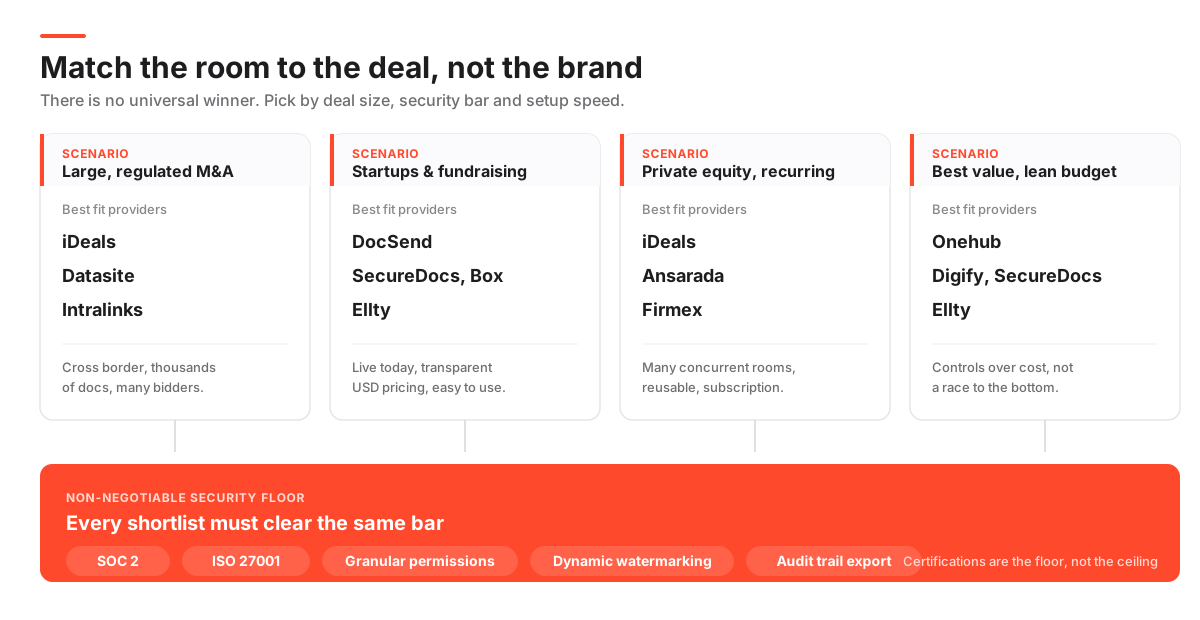
For large, regulated M&A, our top tier is iDeals, Datasite and Intralinks. Ansarada and Firmex sit just behind, strong on mid-market and governance work.
Want something lighter and faster? Look at SecureDocs, DocSend and Box. They score well on setup speed and clear pricing. Ellty is a modern, full-featured room with clear pricing that fits startup and mid-market M&A, due diligence and fundraising.
No provider wins every deal. The table below shows how the leaders stack up on the questions buyers ask first.
| Provider | Our score | Price from (USD) | Free trial | SOC 2 / ISO 27001 | Best for |
|---|---|---|---|---|---|
| Ellty | 9.6 | $149/mo | Yes | SOC 2 Infrastructure | Growing teams running M&A and fundraising |
| iDeals | 9.3 | Custom | Yes | Yes | Mid-market to enterprise cross-border M&A |
| Datasite | 9.1 | Custom | No | Yes | Sell-side advisors and large-cap M&A |
| Intralinks | 9.0 | Custom | No | Yes | Regulated, high-stakes financial deals |
| Ansarada | 8.9 | Custom | Yes | Yes | Deal readiness and board governance |
| Firmex | 8.8 | Custom | Yes | Yes | Reliable mid-market and legal diligence |
| SecureDocs | 7.8 | $250/mo | Yes | SOC 2 only | Startups wanting flat-rate pricing |
The scores are ours, earned through our editorial evaluation against 40+ criteria. No vendor pays for placement. Prices are indicative USD, so confirm current terms with the provider.
Here is the catch: a high score does not mean a room is right for you. A small fundraise rarely needs a banking-grade platform. A complex carve-out will outgrow a lightweight one. Read the score next to the “best for” column, then confirm your shortlist against each provider review.
How we evaluated
Every provider is scored against more than 40 criteria, grouped into security, deal workflow, usability, support and price.
Then we check the results against verified user feedback, not just spec sheets. Same bar for everyone, so the ranking reflects evidence rather than marketing.
Two criteria carry the most weight, because they are the hardest to fake: independent security certification and a complete, exportable audit trail.
Pricing and certification move often at the top of the table, so we re-check both monthly.
Want the full breakdown? Our how we review and rank VDRs page lists every criterion, and the methodology page explains how scores are combined and audited.
Best for M&A and large deals
For large, cross-border or regulated M&A, iDeals, Datasite and Intralinks are the safe choices.
They handle thousands of documents, dozens of bidder groups and the due diligence scrutiny that banking and legal counterparties expect. All three carry SOC 2 and ISO 27001.
On a competitive process, the gap between a good room and a poor one is measured in reviewer hours, not features.
Datasite and Intralinks are what investment banks reach for on sell-side mandates. You get deep analytics and mature bidder Q&A workflows. The trade-off is quote-only pricing and a steeper setup.
iDeals costs less and sets up faster while keeping enterprise-grade security. That combination is why it so often wins mid-market and cross-border deals.
Document-heavy and competitive? Weigh these three first. Read the Datasite review, Intralinks review and iDeals review before you commit, or see the best VDR for mergers and acquisitions hub for a full shortlist.
Best for startups and fundraising
Founders rarely need a banking platform. You need a room that is live today, priced transparently and easy for investors to navigate.
DocSend suits a single deck or a lean room with strong link analytics. SecureDocs offers flat monthly pricing you can read straight off the page. Box works if you already live in it.
Ellty also publishes self-serve USD entry pricing and runs on SOC 2 Infrastructure, so it stays in scope for a seed or Series A raise.
The trap at this stage is defaulting to consumer file sharing. A shared Drive folder cannot watermark a document, cannot prove who downloaded your cap table, and cannot revoke access the moment a term sheet dies.
For a head-to-head against everyday tools, see virtual data room vs Google Drive. To fill the room once you pick one, read what documents go in a data room.
Want a ranked shortlist tuned to early-stage rounds? Start with best VDR for startups.
Best for private equity and recurring deals
Running back-to-back transactions changes the maths. Now the best room supports multiple concurrent projects, keeps a permanent audit history and prices on a subscription rather than per deal.
iDeals, Ansarada and Firmex all handle this pattern well. Reusable templates. Archive rooms that carry an audit trail across a fund’s life. The saving comes from not rebuilding a room for every target.
Ansarada leans into deal readiness and board governance. That suits sponsors who want portfolio companies audit-ready long before a sale opens.
Firmex is the pragmatic mid-market choice. Dependable for legal diligence, without the enterprise overhead.
Buy and hold? Weigh the annual subscription against the number of rooms you will actually open in a year. Our best VDR for private equity and VDR pricing models explained guides show how the numbers shift with volume.
Which rooms have the strongest security
Every provider in the table below clears the same floor: SOC 2 (Ellty on SOC 2 Infrastructure), encryption in transit and at rest, granular permissions and a full audit trail.
The differences show up in the depth of document-level controls. The matrix below compares the security capabilities that matter most on a live deal.
Remember, certifications are the floor, not the ceiling. The day-to-day controls are what decide whether a leak is possible.
| Capability | Ellty | iDeals | Datasite | Firmex | Box |
|---|---|---|---|---|---|
| SOC 2 audited | Infrastructure | Yes | Yes | Yes | Yes |
| ISO 27001 certified | No | Yes | Yes | Yes | Yes |
| Dynamic watermarking | Yes | Yes | Yes | Yes | Limited |
| Document-level permissions | Yes | Yes | Yes | Yes | Folder |
| Full audit trail export | Yes | Yes | Yes | Yes | Varies |
| Structured bidder Q&A | Yes | Yes | Yes | Yes | No |
| Free trial | Yes | Yes | No | Yes | Yes |
Feature availability varies by plan. Box is a content cloud with lighter data-room controls than dedicated VDRs, so confirm current scope with each vendor.
So what do the certifications actually mean? SOC 2, defined by the AICPA Trust Services Criteria, audits how a vendor operates its controls. ISO/IEC 27001, revised in 2022, sets an international standard for information security management around 93 controls in Annex A. Both are independent audits, which is why regulated buyers treat them as table stakes.
Moving personal data across borders? Then residency matters too. Under the EU GDPR, where files are hosted and processed can carry legal weight. Ask each vendor where its data centres sit.
For a deeper walk-through, see the VDR security features checklist, dynamic watermarking and fence view and data residency in virtual data rooms.
What the best rooms cost
Pricing spans a wide range, because the category does.
Lean, self-serve rooms start around $99 to $250 per month on flat plans. Mid-market rooms land in the low-to-mid hundreds. Enterprise and banking-grade platforms are almost always quoted per engagement.
Treat every number here as indicative. Plans, storage limits and seat rules change often, so confirm current pricing with the provider.
| Tier | Indicative price | Billing model | Typical buyer | Watch for |
|---|---|---|---|---|
| Self-serve / lean | $99 to $250 / mo | Flat monthly | Startups, single fundraise | Per-page overage, storage caps |
| Mid-market | Low-to-mid hundreds / mo | Flat or per-seat | SMB M&A, legal diligence | Per-user seat fees |
| Enterprise / banking | Custom quote | Per engagement | Large-cap, cross-border M&A | Setup fees, term commitments |
A headline price tells you almost nothing without the fine print. Two levers quietly inflate the bill: per-page overage charges, and per-user seat fees on plans that look flat at first glance.
So ask every shortlisted vendor three questions. What triggers an overage? How are users and admins counted? What happens to pricing when the room stays open past the initial term?
Our virtual data room pricing guide breaks these levers down with worked examples. Hidden costs of virtual data rooms covers the charges that surprise first-time buyers.
Best value, not cheapest
Best value is not the cheapest sticker. It is the room that clears your security bar at a price your deal can absorb.
For tight budgets with transparent pricing, Onehub (from about $15 per month), Digify (from about $120 per month) and SecureDocs (around $250 per month) are strong entry points. Ellty publishes entry pricing from $149 per month for a modern, full-featured room on SOC 2 Infrastructure.
Value is a ratio of controls to cost, not a race to the bottom.
And watch the arc of the deal. A room that looks cheap monthly can double once you add bidders or upload a large index. Read value over the life of the deal, not the first invoice.
Compare billing models in per-page vs flat-rate data room pricing. If budget is the deciding factor, the cheapest virtual data rooms guide and best value virtual data room hub rank the affordable end without dropping below a safe floor.
How to choose in an afternoon
Choosing well is a short, disciplined process, not a feature beauty contest.
Define the deal. Set a hard security floor. Shortlist by fit. Trial with real files. Compare total cost. Work through the five steps below and you will have a defensible shortlist in an afternoon, not a fortnight of demos.
How to choose the best virtual data room for your deal
A repeatable way to move from a long list to a confident pick.
Estimated time: 2h
-
Define the deal
Write down deal type, document volume, number of external groups and any regulatory or data-residency constraints. This single paragraph rules out half the market.
-
Set your security floor
Require SOC 2 and ISO 27001, granular permissions, dynamic watermarking and an exportable audit trail as non-negotiables, then drop anyone who misses them.
-
Shortlist three by fit
Use our best-for pages and comparison table to pick three providers matched to your deal size and budget, not the three loudest brands.
-
Run a trial with real files
Use a free trial to load a slice of your actual index, set permissions by group and test the Q&A flow. Setup friction you feel now is friction your bidders will feel too.
-
Compare total cost, not headline price
Get quotes that spell out overages, seat counts and post-term pricing, then choose on total cost and fit rather than the sticker number.
Prefer to start from your use case? Our best-for hubs rank a shortlist for each scenario, and the how to choose a virtual data room guide walks the same process in more depth.
Mistakes to avoid
Three mistakes come up again and again. Buying on brand instead of fit. Underestimating setup time. Ignoring the fine print on overages.
Each one is avoidable. Each one costs money or reviewer goodwill once the room is live.
Do this:
- Match the room to deal size and regulatory exposure, not brand recognition.
- Trial with a real slice of your index and real permission groups.
- Read total cost, including overages and post-term pricing, before signing.
- Set your security floor first and drop anything that misses it.
Avoid this:
- Defaulting to consumer file sharing for a sensitive process.
- Discovering per-page or per-seat charges after the room fills up.
- Leaving permissions at folder level when the deal needs document-level control.
- Choosing the platform your bidders will find hardest to navigate.
For the full list, including the setup errors that leak documents, see data room mistakes to avoid and data room index best practices.
What the scores mean
A score is a weighted summary, not a verdict for your situation.
A 9.1 signals a room that performs consistently across security, features, support and value. A 7.8 can still be your right pick if it nails the one dimension your deal cares about, such as flat pricing or a five-minute setup.
Always read the score next to the “best for” note. Where it matters, read the full review.
This is also why we do not chase star-rating snippets. Each number traces back to our evaluation and the same 40+ criteria, documented on our methodology page. When a provider changes plans or certification, the score changes with it.
Frequently asked questions
What is the best virtual data room overall?
There is no universal winner. For large, regulated M&A, iDeals, Datasite and Intralinks lead; for startups and self-serve buyers, SecureDocs, DocSend and Box score well on setup speed and transparent pricing, and Ellty offers a modern, full-featured room at published pricing. Match the pick to your deal size, security needs and budget, not to brand recognition.
Which data rooms are cheapest?
Among providers with published pricing, Onehub (from about $15 per month), Digify (from about $120 per month), Ellty (from $149 per month) and SecureDocs (around $250 per month) sit at the affordable end. Confirm current pricing with each provider, and check for per-page or per-seat charges that can raise the effective cost.
Is a virtual data room more secure than Dropbox or Google Drive?
For deal work, yes. A reputable VDR adds document-level permissions, dynamic watermarking, a complete audit trail and independent certification such as SOC 2 and ISO 27001, controls that consumer file sharing does not provide. Those capabilities are what separate a data room from ordinary cloud storage.
The market moves fast on price and features, so we refresh this ranking on a schedule. Ready to shortlist? Put your two or three finalists head to head on security, features and indicative USD pricing, then open the full comparison table before you sign.
